Christian Felber
International Federation for the Economy for the Common Good, Austria
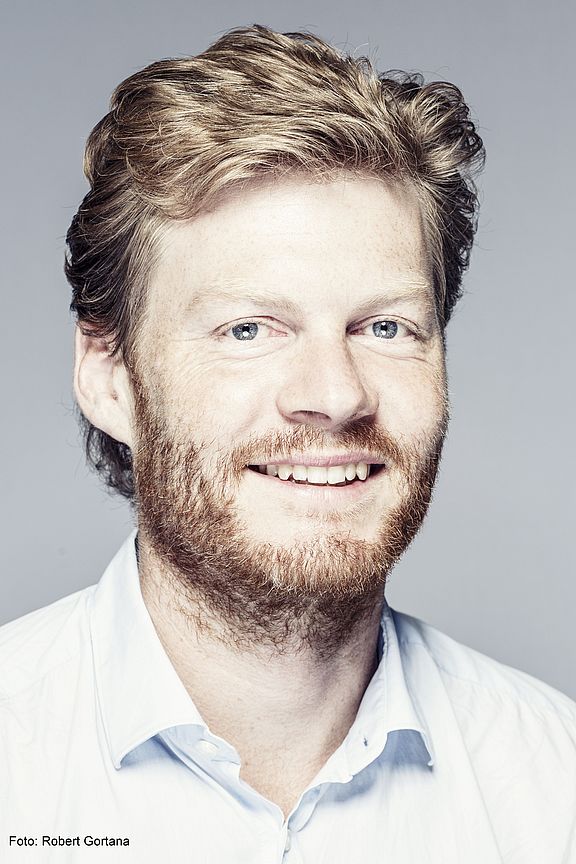

Keynote
Tackling Excessive Wealth Concentration and Inequality: Social Boundaries as the Twin Sister of Planetary Boundaries
Biography
Christian Felber is an Austrian economic reformer, author, dancer, and political activist born in Salzburg. With a background in interdisciplinary studies of political science, psychology, sociology, and Roman languages, he earned his Magister degree from the University of Vienna and has since become one of Europe’s leading voices in alternative economic thought.
Since 2000, Christian Felber has been a founding member and speaker for Attac Austria, a global civil society organization focused on economic and social justice. In 2010, he launched the Economy for the Common Good (Gemeinwohl-Ökonomie) movement, a transformative economic framework that redirects economic activity toward maximizing wellbeing for all within planetary boundaries, rather than perpetual growth, competition and profit maximization. This concept has inspired a global movement – ECOnGOOD – now active in over 33 countries.
A prolific author and commentator, Christian Felber has published 17 books, including his seminal work Gemeinwohl-Ökonomie, which has been translated into 12 languages and includes a foreword by Nobel Prize-winning economist Eric Maskin. In 2017, his book Money. The New Rules of the Game received the “getAbstract” international book award at the Frankfort Book Fair; in 2017 he was awarded the ZEIT Wissen Prize “Mut zur Nachhaltigkeit”. In 2018, he became a founding member of the civil society movement Finanzwende.
Beyond his economic work, Christian Felber is a passionate contemporary dancer and performer, having choreographed and performed pieces that combine partnering with sustainable economics at international venues. He has taught and researched at multiple institutions including the University of Economics and Business Vienna, IASS Potsdam (now RIFS), and Schumacher College. He received the teaching award from the University of Graz and the “Premio Nueva Civilización” from Universitas Nueva Civilización Chile.