Chelsea Mandrigues
Socio-Economic & Environmental Advocate
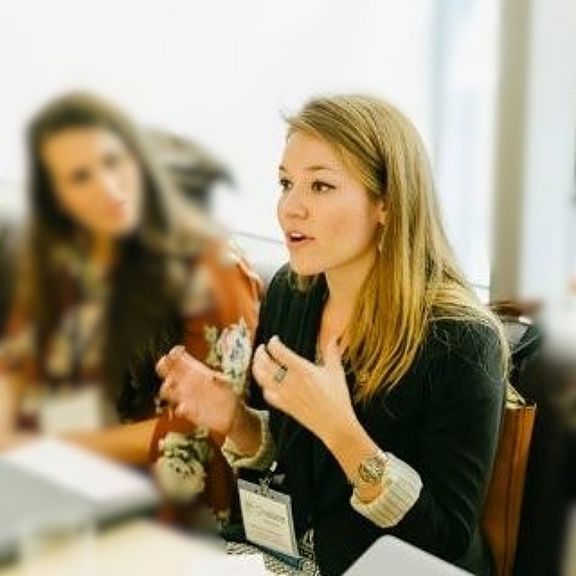

Round Table Discussion
Biography
Chelsea Mandrigues has extensive interdisciplinary experience across the international affairs sector. She will be graduating with a dual master's in Global Sustainability and International Affairs at the University of South Florida. Her bachelor’s degree is in International Affairs and Political Science. In the economic sector, she worked in financial crime product compliance, developing compliant technological frameworks that advanced financial inclusion initiatives for unbanked populations within international fintech operations across Singapore, Estonia, London, Florida, and New York.
Her career includes contributions to the field of human rights, environmental justice, social justice, geopolitical issues, climate strategy, inter-faith advocacy, and global economy research and praxis through collaborations with think tanks and nonprofits in Washington, D.C., Florida, and Argentina. In addition, she has contributed to refugee immigration services, torture survivor rehabilitation programs, and strategic advocacy initiatives across the United States with a national Jewish refugee resettlement agency. As a social entrepreneur, she has developed technology-driven and community-centered solutions, like chatbots for nonprofits and trauma-informed yoga programs for vulnerable populations. Currently, Ms. Mandrigues is the Communications Coordinator at the largest Muslim civil rights and advocacy organization in the U.S., advocating for civil rights and social justice for all, as well as an environmental Research Associate, providing pollution prevention cost-savings consultations for sustainable businesses.
Chelsea is attending ECGIC with her colleague, Zaid Alkhairi, to present their research on Ecocide, A Lens on Declining Sustainability Infrastructures and their Environmental and Human Impacts, and Rebuilding within Just Transitions. The team collaborates on applied research praxis for sustainable solutions for post-ecocide recovery and refugee camp resiliency, as well as the identification of issues that exacerbate environmental, human, and economic violence. Solar water heaters, coastal restoration, shipping container farms, vertical farming, and more will be discussed during their presentation.