Anatomy Lab on the Road Enables the Biology Education of the Future
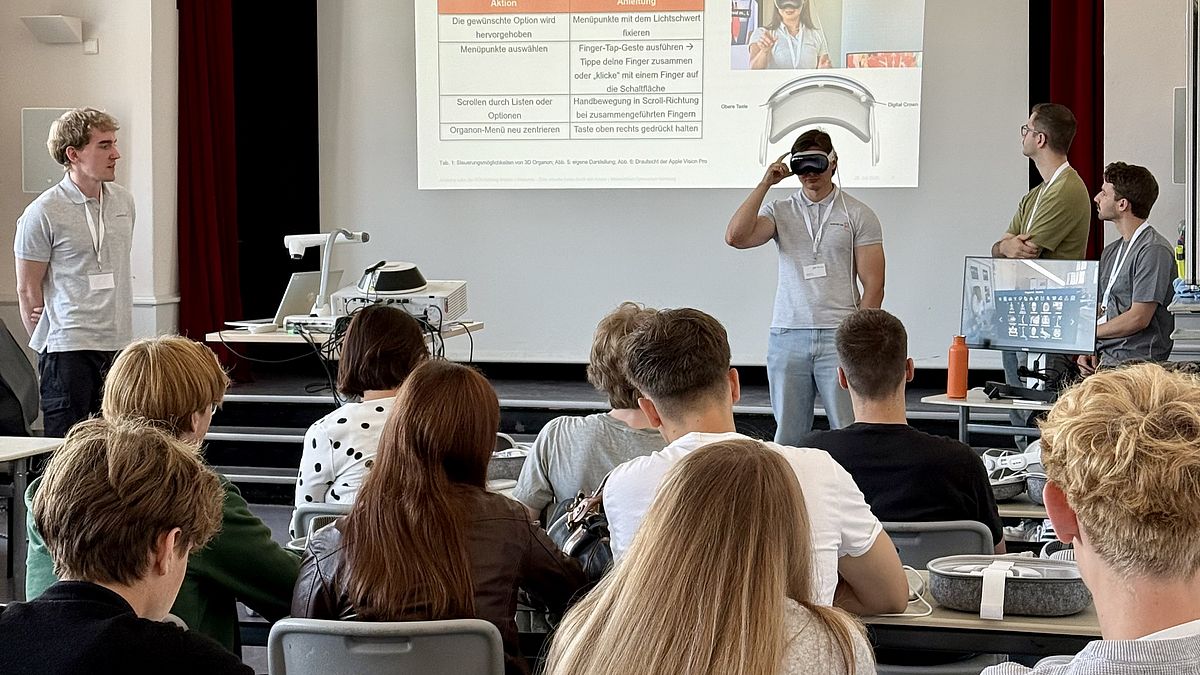
The Anatomy Lab on the Road inspires students with an innovative VR/AR interactive practical session — a "Virtual Journey Through the Human Body" in science education.
As part of a forward-looking collaborative project between the OTH Amberg-Weiden and Melanchthon-Gymnasium Nuremberg, 60 students from Year 10 were able to dive into the fascinating world of virtual anatomy on July 25, 2025.
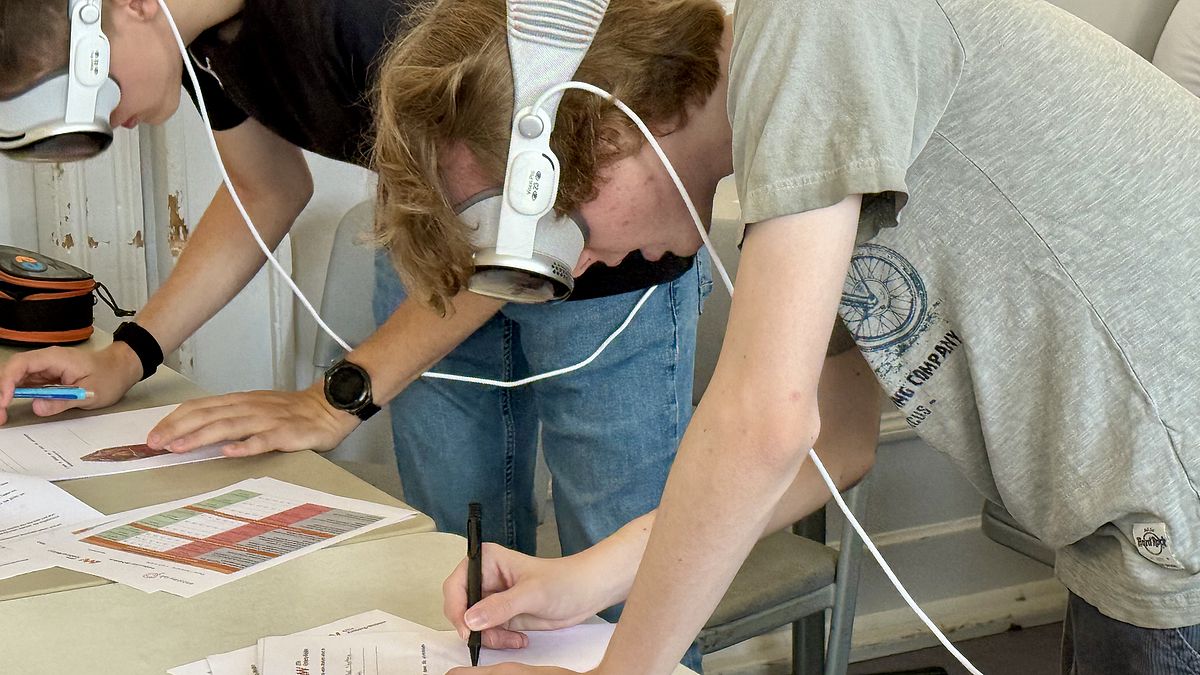
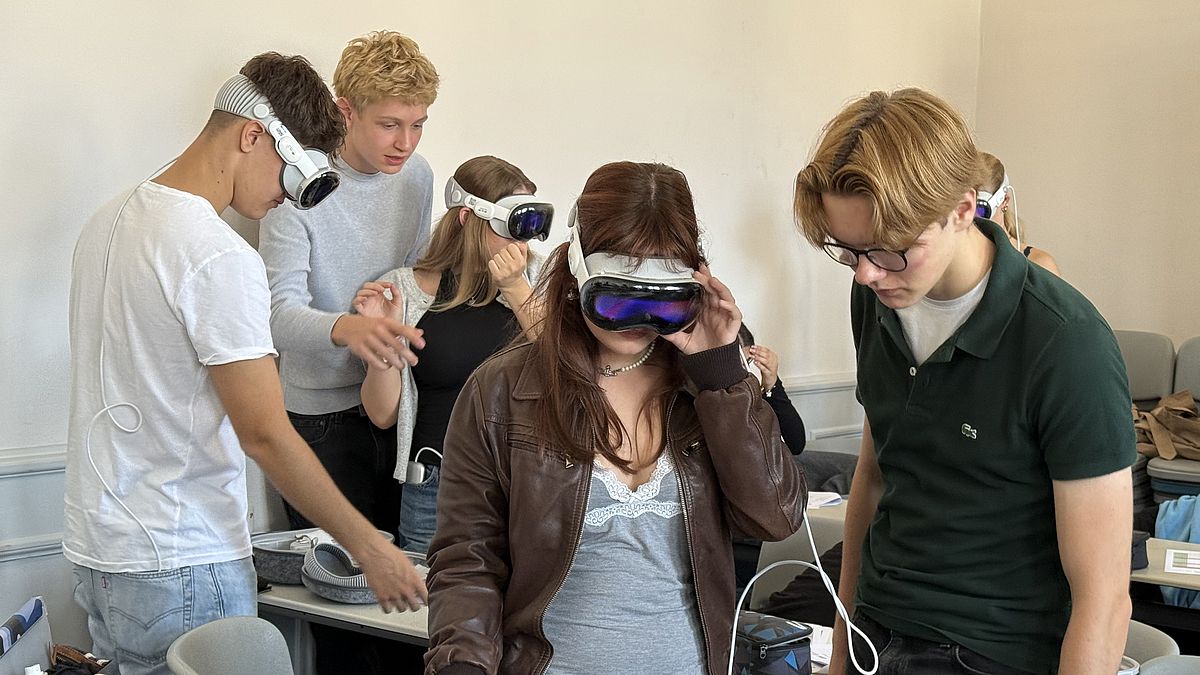
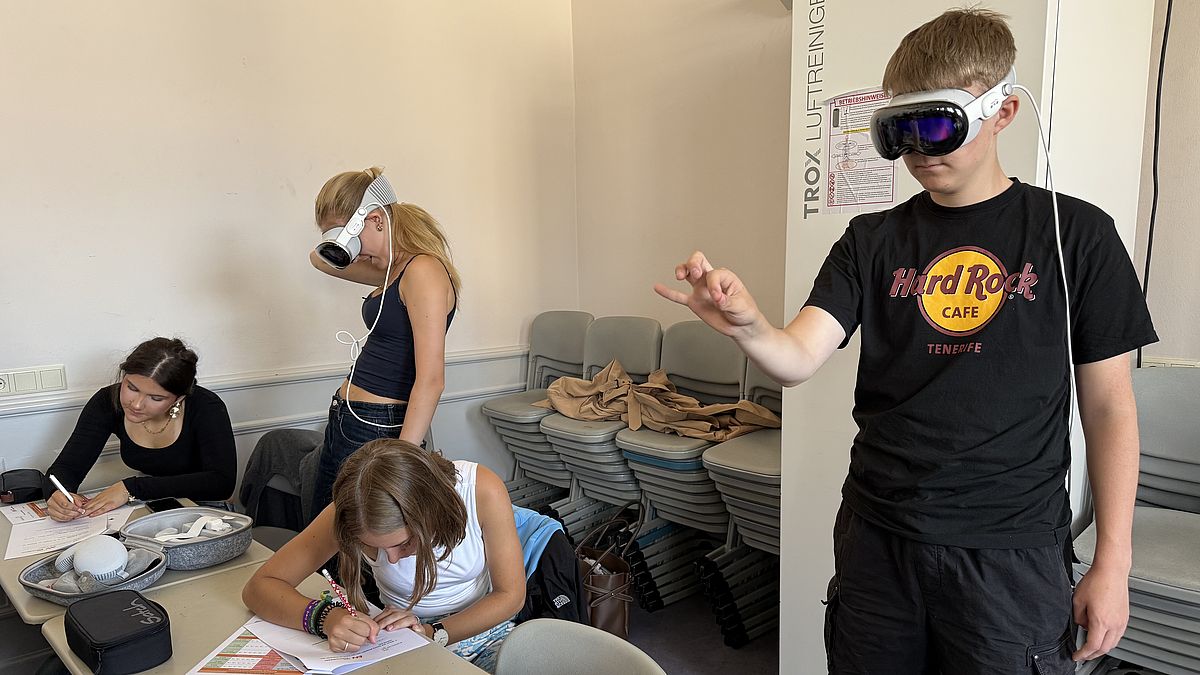
The interactive practical session was carried out successfully at a school for the first time, opening up new learning perspectives with the help of cutting-edge technology. Led by Prof. Dr.-Ing. Eva Rothgang (Digital Process Chains in Medical Care and Medical Technology), head of the Anatomy Lab at the Institute of Medical Engineering at OTH Amberg-Weiden, students experienced in two groups how biology lessons can be enriched through immersive technology. Working in tandems, they completed an interactive quiz on human organs, supported by the Apple Vision Pro and the anatomy software 3D Organon, which enables three-dimensional exploration of the human body. Students could see bones and organs in real-time 3D and break down anatomical structures into their individual components.
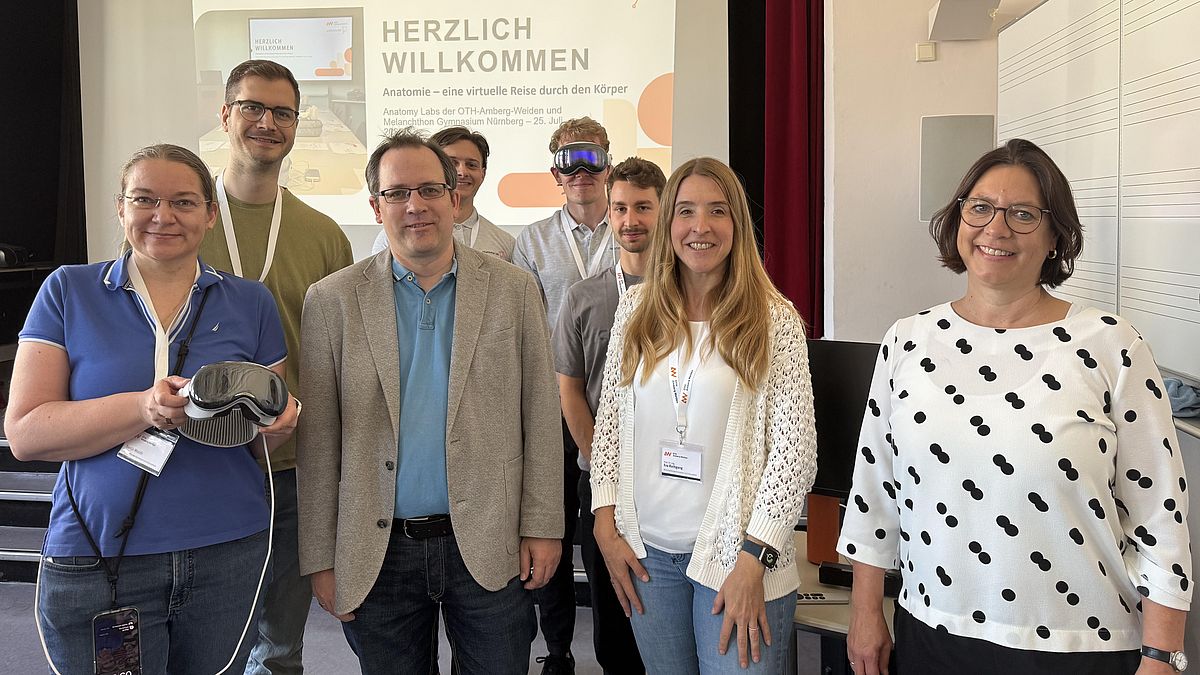
The project was organized by Sonja Waldt (M.Sc. Medical Engineering), a research associate at the university, in close collaboration with deputy headteacher Ms. Wildner. Headteacher OStD Dr. Reichardt and the teaching staff also actively supported the event on site. In addition, two Master's students in Medical Engineering further developed the practical session as part of their semester project and prepared it didactically for use in schools.
The innovative VR/AR setup makes it possible to bring core content from the Bavarian Year 10 biology curriculum to life in a directly experiential way. This includes topics such as gas exchange in the lungs, differences between pulmonary and systemic circulation, and the function of the cardiovascular system including the structure of the heart (e.g. chambers, valves, and the cardiac cycle). Through the VR/AR environment, students were able to intuitively grasp and deepen their understanding of structure-function relationships required by the curriculum.
The practical session marks an important milestone in the planned long-term collaboration between the university and the school. It impressively demonstrates how modern technology can not only strengthen interest in science subjects, but also open up new didactic approaches in the classroom. "With VR headsets, the invisible becomes visible. Our students were enthusiastic and highly motivated," summarized the deputy headteacher. Prof. Dr.-Ing. Rothgang also sees great potential in the project: "Formats like this are an innovative bridge between research, teaching, and school education." Further joint projects are planned for the future.